Every now and then someone asks me, with a tone that mixes curiosity and pity, whether I still build WordPress sites. The question usually comes from a colleague working with something newer, or from a client who read that WordPress is insecure, slow or a thing of the past. My answer is almost always the same: yes, and with more judgment every time.
WordPress isn’t perfect. It has real security, performance and maintenance problems. But it’s also one of the most democratic tools for publishing on the internet. And I think it’s worth defending without romanticizing it.
The criticisms are true (partly)
Let’s start with what I don’t like. WordPress can be insecure. It can be slow. It can turn into a Frankenstein of plugins that nobody understands. I’ve seen installs with forty plugins, three page builders and a theme bought from a shady marketplace. That’s not WordPress: that’s one decision after another with no judgment.
Most security problems don’t come from the core, but from outdated plugins and themes. Most performance problems don’t come from WordPress, but from cheap hosting, five-megabyte images and layers of scripts nobody audits. The platform amplifies whatever you put into it.
An updated WordPress with few plugins, good hosting and someone responsible for it is as secure as any other site. An abandoned WordPress is a problem, like any abandoned project.
What it does well
WordPress has an advantage that almost never gets valued: it’s common. You lift a rock and there’s a developer who knows how to work on it. There’s documentation, tutorials, courses, hosting, plugins, agencies, communities. If the original developer isn’t around, anyone can maintain a WordPress. That continuity is enormously valuable to a client.
It’s not a minor detail: according to W3Techs, more than 40% of the world’s websites run on WordPress. Not because people don’t know the alternatives, but because the platform solves a very specific problem: publishing content without depending on an in-house technical team.
It’s also democratic in the best sense: the client can publish, edit, add a page, change an image. They don’t depend on me for every change. That frees up time, reduces friction and keeps the site alive. A site the client can’t touch dies of boredom within six months.
And it has an ecosystem that solves almost everything: SEO, forms, e-commerce, memberships, multilingual, analytics, backups. They aren’t always the best tools in the world, but they’re there, they work and they integrate. For many projects, that’s worth more than technical elegance.
When yes
- Content sites, blogs, corporate sites, landing pages, portfolios and news sites.
- Clients who publish often and need the autonomy to edit without calling a developer.
- Small or mid-sized e-commerce with WooCommerce.
- Projects with tight budgets and deadlines, where you need to ship fast.
- Teams without an in-house developer that need an ecosystem, support and a large community.
- Sites that need SEO, multiple languages or integrations without building everything from scratch.
When no
- Applications with complex business logic, real-time features or flows that aren’t content.
- SaaS products or web apps where WordPress would be a patch on an architecture that wasn’t designed for it.
- Projects with extreme performance or security requirements that demand a custom architecture.
- Very small static sites where a generator like Astro is simpler, faster and cheaper to maintain.
- Clients who won’t maintain it and won’t pay for maintenance. In that case, any platform is a risk; WordPress just makes it more visible.
Good practices
If you’re going to use WordPress, use it seriously. These are the rules I apply:
- Decent hosting. This isn’t where you save money. Good managed hosting with backups and staging prevents half the problems.
- Minimum plugins. One per function (and make sure they don’t conflict), from trusted sources, kept up to date. If I don’t use it, I uninstall it.
- Core, theme and plugins up to date. Updates aren’t optional.
- Automatic backups and restore tests. A backup you’ve never tried to restore isn’t a backup.
- Staging for testing changes. Never update production on a Friday afternoon.
- Users and roles. Only the permissions people need. Two-factor authentication for administrators.
- Performance. Caching, CDN, optimized images and a lightweight theme. Not everything is solved with a speed plugin.
- Security. WAF, SSL, monitoring and a response plan.
- Documentation and access. The client has to own their site: hosting, domain, repository, credentials.
- Maintenance with a contract. WordPress isn’t a project you deliver and forget. It’s a living system.
The flag
I don’t defend WordPress because it’s perfect. I defend it because, used well, it’s still one of the most useful tools for someone to publish without depending on anyone. And because the alternative isn’t always better: I’ve seen projects on the most modern stacks end up orphaned because nobody knew how to touch them.
WordPress has one huge merit: it lowered the cost of entry to the web. Millions of people who would never have had a site now have one. Many of those sites are mediocre, sure. But there are also small businesses, libraries, artists, NGOs and projects that exist thanks to that open door.
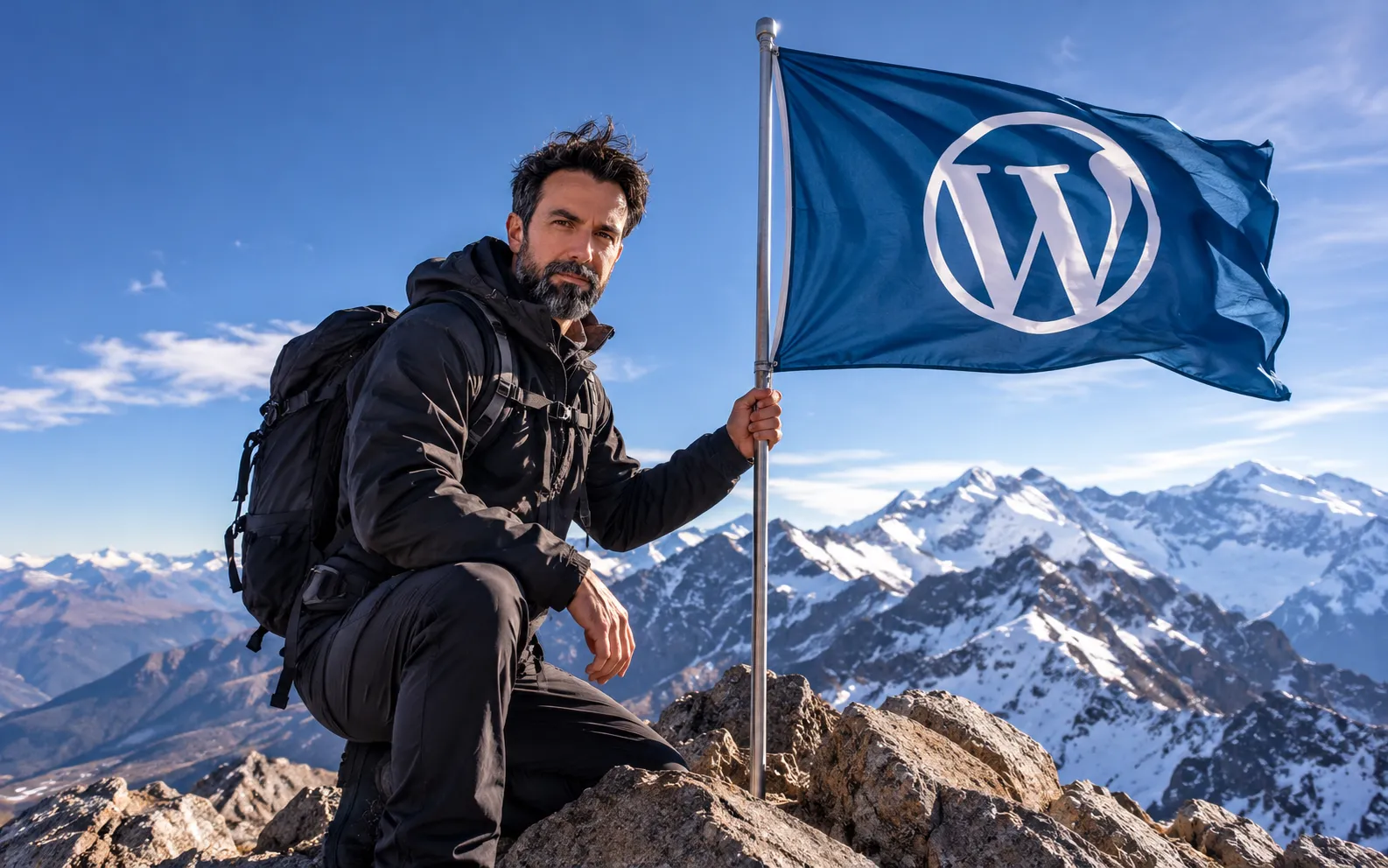
That’s why I’m still planting the flag. Not because I think WordPress is the answer to everything, but because I think it’s still the right answer for many projects. And because a client who can publish without asking permission is a client with more freedom.
Next time someone tells you WordPress is dead, ask them what alternative they’d give that client who needs to publish tomorrow, with a small budget and no technical team. If the answer is another platform, great. If there’s no answer, WordPress is still there. With its flaws and with an enormous community willing to keep it standing.